Commercial Roofing in Plymouth MN
From One Local Business To Another
What commercial exterior restoration actually covers
One Point Of Contact Commercial Roofing Solutions
MuleHide Certified Installation Contractor: As a manufacturer certified MuleHide installation contractor, which covers flat and low-slope roofing systems used on commercial buildings, garages, and additions we can offer exclusive installation of warrantied MuleHide membrane products.
Commercial Siding and Cladding Replacement: Commercial properties in Plymouth use a variety of cladding materials including metal panel, vinyl, fiber cement, and EIFS systems.
Multi-System Insurance Documentation: Proof Builders documents all affected systems in a single organized assessment package. The commercial insurance process typically involves adjusters with commercial property backgrounds and benefits from the same thoroughness of documentation that produces complete residential scopes.
Free Roof Quote In 30 Seconds
Claim Your INSTANT Roof Quote Today
Important Lessons For Commercial Property Managers In Minneapolis-St. Paul
Why Commercial Exterior Restoration Requires a Different Approach and When to Act
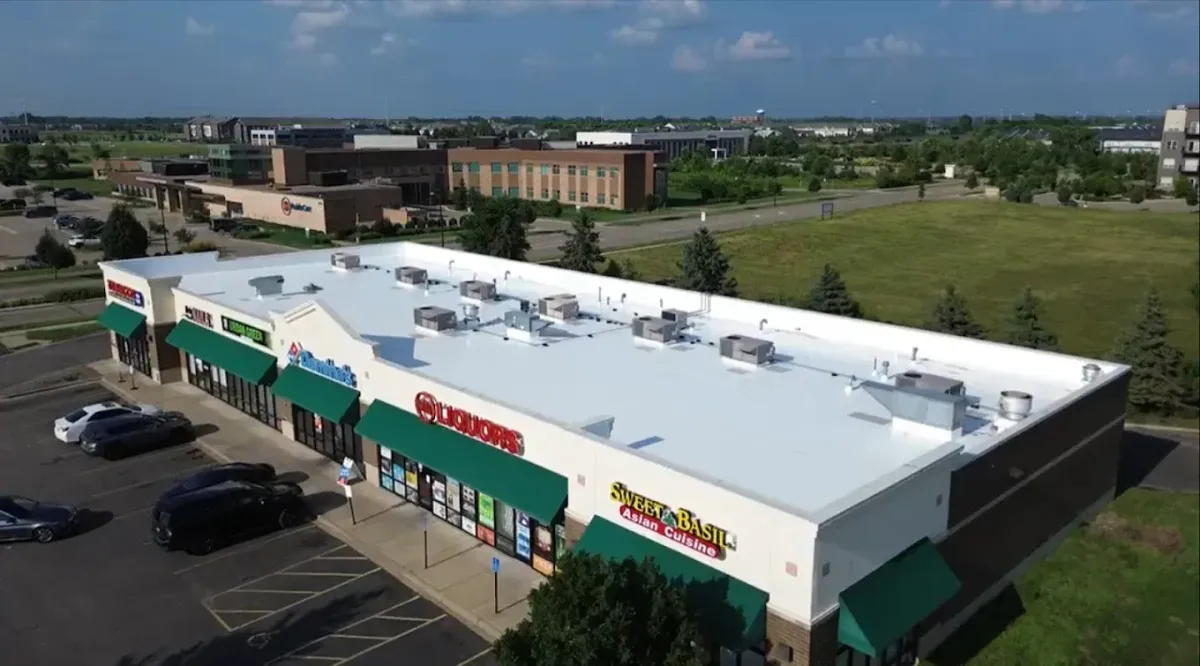
Commercial exterior restoration covers the assessment, documentation, and replacement of storm-damaged roofing, siding, gutters, and related components on commercial properties including retail buildings, office facilities, and light industrial structures. Property owners and managers in Plymouth search for a commercial restoration contractor when a hail event has damaged their building's exterior and they need a contractor capable of handling both the insurance documentation process and the physical work across all affected systems. The assessment and supplementation process on a commercial property follows the same principles as residential work, with the additional considerations of business continuity, commercial insurance policy structures, and MuleHide-certified flat or low-slope roofing systems where applicable.
What Makes Commercial Storm Damage Restoration Distinct from Residential Work
Commercial Insurance Policies Have Different Scope and Depreciation Structures: Commercial property insurance policies typically use replacement cost value or actual cash value coverage for building components, similar to residential policies, but the policy structures around deductibles, coverage limits per occurrence, and business interruption provisions are more complex. The documentation standard for a commercial claim is the same as residential: thorough photographic evidence of every affected component organized by system and location. The difference is in the adjuster relationship, as commercial adjusters work larger claim values and are more accustomed to detailed scope submissions and supplements.
Commercial Roofing Systems Include Flat and Low-Slope Applications Not Common in Residential Work: Plymouth commercial properties frequently use TPO, EPDM, and similar single-ply membrane systems on flat or low-slope roof sections. These systems respond differently to hail impact than asphalt shingles. Impact damage on membrane roofing may not be visible as surface denting but can compromise the membrane at stress points or seams. Assessment of membrane systems requires a different inspection protocol than shingle assessment.
Business Continuity Affects Project Sequencing: Commercial restoration projects need to be sequenced around the operational schedule of the business occupying the building. Roofing work on an occupied retail or office building is typically staged across days or sections to minimize disruption to operations below. This scheduling consideration affects crew size, material staging, and the total project timeline in ways that differ from residential replacement.
Multi-Tenant Buildings Require Coordination Across Multiple Stakeholders: Commercial properties with multiple tenants involve both the property owner and the individual business occupants in any significant restoration project. Advance notice requirements, access coordination, and the communication chain between contractor, property manager, and tenants add a layer of project management that single-family residential work does not require.
When to Move Forward on a Commercial Exterior Restoration
Immediately After a Qualifying Hail Event: Commercial properties in Plymouth's hail corridor are subject to the same storm patterns that damage residential roofing throughout Hennepin County's western suburbs. The documentation window is the same as residential: photographs taken promptly after a storm event, before any subsequent weather further complicates the damage picture, produce the most useful evidence for the insurance process.
Before Commercial Insurance Claim Filing Deadlines: Commercial property policies in Minnesota typically require claims to be filed within one year of the storm event. Filing promptly preserves the full range of coverage options and avoids the complication of attempting to document damage that has been altered by subsequent weather or deferred maintenance activity in the intervening period.
A Process Built On Transparency
Safer Homes & Happier Families In Just 4 Steps
1. Commercial Property Assessment:
We approach commercial exterior assessments using the same systematic documentation process that has produced thorough and complete scope packages on residential projects. Every roof surface, wall elevation, gutter run, and supplemental component is photographed by system and location. For flat or low-slope membrane sections, MuleHide certification provides the technical background to assess membrane condition in addition to edge metal, parapet flashing, and drainage components.
2. Commercial Insurance Documentation:
Commercial scope packages are organized to communicate clearly to commercial adjusters who are accustomed to detailed line-item submissions. We bring the same documentation discipline to commercial claims that has produced complete and supplemented scopes on residential projects: photographs referenced by system and location, missing line items identified specifically, and supplement submissions organized to support efficient adjuster review.
3. Scope Review and Supplement:
When the commercial adjuster's estimate arrives, we review it against our assessment documentation using the same process as residential review. Missing components are identified and submitted as a supplement with supporting photographs. Commercial claims have larger individual line items, which makes thorough review proportionally more valuable to the property owner.
4. Installation Planning Around Business Operations:
We discuss project sequencing relative to the operational schedule of the property before any work begins. Roofing on occupied commercial buildings is staged to minimize disruption, material is staged appropriately for the site layout, and crew scheduling accounts for access requirements specific to each property. Communication to tenants or building occupants is coordinated with the property owner or manager before work begins.
5. Installation and Documentation:
Commercial installation uses the same certified products and installation standards as residential work. For flat roofing sections, MuleHide certified installation is required to activate manufacturer warranty coverage. All work is documented with photographs at completed stages and warranty paperwork is provided to the property owner at close of job.
Frequently Asked Questions
Common Questions Your Neighbors Are Asking
Does commercial property insurance cover hail damage to roofing and exterior systems?
Yes. Commercial property insurance policies in Minnesota cover hail and wind damage to roofing, siding, gutters, and related exterior components when the damage results from a covered storm event. Commercial policies use the same covered-peril framework as residential policies, with deductible and coverage limit structures specific to the individual commercial policy. The documentation standard for a commercial claim is the same as residential: organized photographic evidence of every affected component provides the basis for a complete initial scope and supports any supplement required when the adjuster's estimate is incomplete.
What is MuleHide roofing and why does it matter for commercial properties?
MuleHide is a manufacturer of TPO, EPDM, and related single-ply membrane roofing products used on flat and low-slope commercial roofing applications. Their products are backed by manufacturer warranties that require installation by a MuleHide-certified contractor to be valid. For Plymouth commercial property owners replacing a flat or low-slope roof as part of an insurance restoration or planned replacement, contractor certification matters because a non-certified installation cannot carry the full manufacturer warranty. Proof Builders holds MuleHide certification.
How long does a commercial roofing project take in Plymouth?
Commercial roofing project duration depends on the roof area, the system type, and the access and staging conditions of the specific property. A single-story retail or office building with a moderately sized footprint can typically be reroofed in two to four days. Larger footprints, multi-story access requirements, and membrane system installations take longer than shingle installations of comparable area. Business continuity staging, where work is sequenced around operating hours or tenant access requirements, also affects the total duration.
Can Proof Builders handle commercial and residential work in the same storm damage claim?
Yes. Some Plymouth property owners have both a residence and a commercial property affected by the same storm event, or manage a mixed-use property where different sections fall under different insurance policies. Proof Builders can assess and document both under separate claim files with organized documentation for each, and can coordinate the installation sequencing to align with each property's operational needs. The same inspection discipline and scope review process applies to both.
Taking The Headache Out Of Home Improvements
Local Service Areas
Building A Brighter Future For The Greater Twin Cities

Quick links
MN License #BC646808
Copyright 2026. Proof Builders Co. All rights reserved.