
Minnesota's Go-To Roofing Contractor
GAF Certified Plus Roofing Experts In Plymouth MN
What a Roofing Contractor Actually Does
Thinking About A New Roof? Start Here
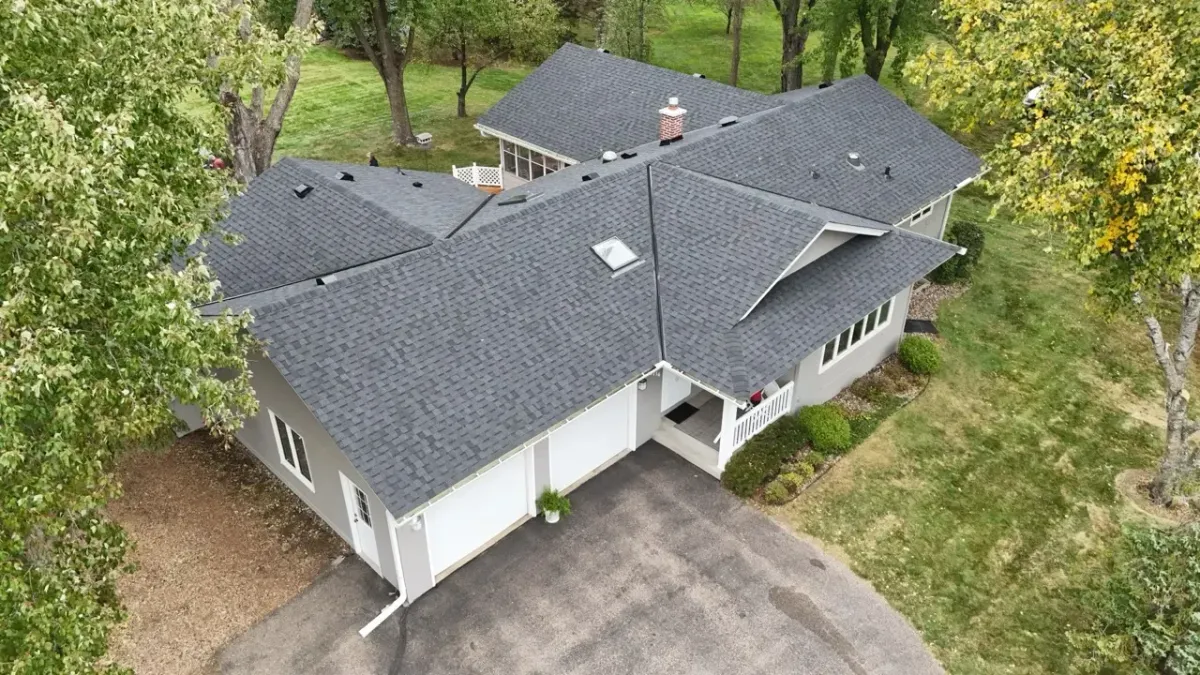
Hail and Storm Damage Replacement: The most common trigger for roof replacement in Plymouth. Hail impact bruises the asphalt mat beneath the granule surface, and damage that looks cosmetic from the ground accelerates material failure within two to five years.
Full Roof Tear-Off and Reinstallation: Complete removal of existing shingles, underlayment, and damaged decking down to the structural sheathing, followed by full reinstallation of all components as a new system.
Impact-Resistant Class 4 Shingles: Engineered specifically for hail-prone markets. Class 4 shingles carry an UL 2218 certification, meaning they have been tested to resist cracking under simulated hail impact.
Free Roof Quote In 30 Seconds
Claim Your INSTANT Roof Quote Today
How Your Neighbors Are Protecting Their Homes
Proactive Ways To Keep Your Home and Your Family Safe For Years To Come
Plymouth homes built between 1975 and 1995 are now reaching the outer edge of their original roofing system lifespans. At the same time, the western Twin Cities suburbs sit in a corridor that sees repeated hail activity across most active storm seasons. Those two realities create a specific decision environment for Plymouth homeowners: a roof that might have had five more serviceable years under normal wear is frequently pushed into replacement territory by a single hail event that compounds existing fatigue. Understanding what actually determines that threshold helps homeowners make a grounded decision rather than relying entirely on a contractor opinion or an insurance scope written by someone who spent fifteen minutes on the roof.
What Makes Roof Replacement The Right Call
Hail Impact Accelerates Failure in Ways That Are Not Visible from the Ground: When hail strikes an asphalt shingle, it dislodges granules at the point of impact. Those granules are not decorative. They are the UV-protective layer that slows oxidation of the asphalt mat beneath. A shingle that loses significant granule coverage at impact points begins deteriorating at those locations within one to two seasons. The damage is typically invisible from the ground and often does not produce a leak for two to four years, by which time the decking underneath may have absorbed moisture through the compromised areas.
Plymouth Homes from the 1970s to 1990s Face a Specific Replacement Window: The majority of Plymouth's residential housing stock was built between 1975 and 1995. Standard three-tab asphalt shingles installed during that period carry a 20 to 25 year manufacturer lifespan. Even homes that received upgrades to architectural shingles in subsequent years are approaching the 25 to 30 year range. A roof at the edge of its designed lifespan that sustains a hail event is generally a replacement, not a repair, because the remaining material cannot be warranted against future failure at the same standard as new installation.
Partial Repairs on Storm-Damaged Roofs Rarely Pass Insurance Requirements: When a roof sustains hail damage across more than 25 percent of its total surface area, most insurance policies require full replacement rather than selective patching. This is because new shingles installed alongside aged shingles cannot be matched for color or warranty, and the overall system integrity is compromised regardless of which sections are physically damaged. Understanding this threshold before calling an adjuster determines how the scope gets written.
Stay Ahead Of The Curve: Practical Timing For Replacing Your Roof
Spring and Early Summer Are the High-Demand Window: Plymouth's primary hail season runs from late April through August, aligned with the broad Upper Midwest severe weather pattern. After significant hail events, roofing crews in the Twin Cities metro book out quickly, sometimes four to eight weeks out from the date of the storm. Homeowners who call within the first week after a storm typically have more scheduling flexibility than those who wait for a second inspection or a second opinion before committing. Material lead times for specific shingle lines can also add one to two weeks beyond crew availability.
Insurance Claim Filing Deadlines Are Real Constraints: Minnesota homeowners policies generally require claims to be filed within one year of the date of the storm event. However, supplements to an existing claim, which address items missed in the initial scope, are most effectively submitted while the project is still active. An insurance file that has been closed and then reopened for a supplement faces additional scrutiny. Homeowners who discover missed line items after their project is complete may have more difficulty recovering those amounts.
Fall Installation Carries Ice Dam Risk for Improperly Ventilated Roofs: Roofs installed in October and November in Plymouth are heading directly into ice dam season. A new roof installed on an attic with inadequate ventilation will develop ice dams at the eave within the first winter, and the damage those dams cause can void workmanship warranties if the ventilation condition was not addressed before installation. This is one reason why ventilation is assessed and corrected during tear-off rather than treated as an optional upgrade.
Class 4 Shingle Premium Discounts Require Installation Before Renewal: Several major insurance carriers offering premium discounts for Class 4 impact-resistant shingles in Minnesota require the installation to be completed and documented before the next policy renewal date. Homeowners who are considering Class 4 shingles for the premium benefit should confirm their policy renewal timing before scheduling installation.
A Process Built On Transparency
Safer Homes & Happier Families In Just 4 Steps
1. Get In Touch With Our Team
Give us a call, fill out a contact form to request an inspection or get an instant quote for your roof today! Once we understand more about your project, one of our expert team members will come out to inspect your home!
2. Initial Inspection & Documentation
Your dedicated exterior expert will walk your property with you, inspect your roof, and document all findings. They will then sit down with you and walk you through the next steps specific to your situation, as well as timelines, ensuring you're left without any questions unanswered!
3. Build Day: What To Expect
Your assigned project manager will be on-site to manage your build from start to finish. Our in-house crews are fully-trained and certified by industry leading manufacturers so you can rest easy knowing your home is in good hands!
4. Quality Clean-Up & On-Going Support
Following your installation, we will run a triple magnetic sweep to ensure the only thing left behind is a beautiful new home! After your final walk-through you will be granted access to our quality assurance department, because we don't believe the job ends here. If there's anything we can help with in the future, you automatically jump to the front of the line!
Frequently Asked Questions
Common Questions Your Neighbors Are Asking
Do I need a full replacement or could I repair my roof?
The clearest indicators for replacement rather than repair are hail damage covering more than 25 percent of the roof surface, a roof age of 20 years or more on three-tab shingles or 25 or more years on architectural shingles, and active granule loss visible in gutters and downspouts across multiple drainage zones. Curling, cupping, or buckling shingles across large sections indicate the mat beneath has dried out and is at or past the end of its functional life. A single area of damage on a roof that is otherwise in good condition is usually a repair. Widespread impact damage on a system approaching its designed lifespan is usually a replacement, and the economics of repair versus replacement shift significantly once you account for warranty coverage on the repaired sections.
What is the best roofing material for homes in Plymouth MN?
For the majority of Plymouth homes, GAF architectural asphalt shingles represent the best combination of cost, performance, and warranty coverage for this specific climate. They are engineered to handle the thermal expansion and contraction that comes with temperatures swinging 100 degrees across a Minnesota year, and they carry manufacturer warranties of 30 to 50 years depending on the product tier. For homes in exposed locations or those that have sustained multiple hail events, Class 4 impact-resistant shingles from manufacturers including GAF, Owens Corning, and CertainTeed provide meaningful performance upgrades and often qualify for insurance premium discounts from major carriers. Metal roofing offers the longest lifespan of any residential option, typically 40 to 70 years, with superior resistance to both hail and wind uplift, at a higher initial cost.
What premium roofing options does Proof Builders install?
In addition to traditional asphalt shingle roofing, and metal roofing. Proof Builders offers premium roofing systems for homeowners looking for a more distinctive exterior. Options include DaVinci Select Shake and Unified Steel Barrel-Vault Tile, depending on the home's design, roof structure, and project requirements.
Will a new roof increase the value of my home in the Northwest Twin Cities Metro?
A new roof in Plymouth increases home value both directly and indirectly. The direct value is the removal of a deferred maintenance item that home inspectors flag and buyers use to negotiate price reductions, typically far out of proportion to actual replacement cost. In the Plymouth market, where buyers frequently commission pre-inspection reports before making offers, a roof with documented hail damage or end-of-life shingles creates leverage for price negotiation that a new roof eliminates. The indirect value comes from the warranty documentation and inspection record that a properly installed and GAF-certified roof carries, which transfers to the new owner and removes uncertainty from the transaction. National data on return on investment for roof replacement typically runs in the 60 to 70 percent range, though in markets where buyers are paying close attention to deferred maintenance, the negotiating leverage avoided often makes the effective return higher.
How long does a roof replacement take?
A standard residential roof replacement in Plymouth takes one full working day when the crew is properly resourced and weather cooperates. The crew arrives early, completes tear-off, decking inspection and any necessary repair, and full reinstallation through ridge cap and cleanup in a single visit. The roof is weathertight the same day it is started. Roofs with unusually large square footage, steep pitches, or significant decking repair needs may run into a second morning, but the typical Plymouth home is a one-day project. The surrounding timeline, including inspection, insurance documentation, material ordering, and scheduling, generally runs two to four weeks from first contact to installation day.
How much does the average roof replacement cost in Plymouth MN?
Roof replacement cost in Plymouth depends on four variables: the square footage of the roof, the pitch and complexity of the roof geometry, the shingle product selected, and whether there are underlying issues like decking damage or inadequate ventilation that need to be addressed before new material goes down. A standard ranch or two-story colonial in Plymouth with an asphalt architectural shingle system typically falls between $12,000 and $16,000 for materials and installation. Roofs with steep pitches, multiple facets, skylights, or chimneys run toward the higher end of that range and sometimes above it. Class 4 impact-resistant shingles add a premium of roughly $800 to $1,500 over a standard architectural shingle system, which could often be offset by the insurance premium discount they qualify for.
What Should You Expect During a Roof Replacement, Start to Finish?
A standard Plymouth roof replacement runs from early morning to late afternoon in a single day. The crew arrives, tears off the old material, inspects the decking, installs underlayment and ice and water shield, lays the new shingles, and runs a magnetic nail sweep before leaving. You do not need to be home. The roof is fully weathertight the day it is installed.
How Should You Prepare Your Home for a Roof Replacement?
Most of what you need to do before a roof replacement takes less than an hour. Move vehicles out of the driveway, clear the perimeter of the house of anything fragile or movable, take pictures off walls near the roofline inside the house, and make sure the crew has access to water and clear pathways around the building. Everything else is handled by the contractor.
What Should You Expect During the Roofing Insurance Claim Process?
The roofing insurance claim process in Minnesota runs from storm event through inspection, scope issuance, contractor review, and installation. Most approved claims are completed within four to eight weeks of filing. The step most homeowners do not know about is the supplement: when the adjuster's initial scope is missing items that were documented in the inspection, a written supplement with supporting photographs can be submitted to add those items before work begins.
What Does Synthetic Underlayment Do for Your Roof?
Synthetic underlayment is a polymer-based membrane installed over the roof decking and under the shingles. It serves as the roof's secondary water barrier, providing protection against moisture if shingles fail or are lifted in a storm. Compared to traditional felt, synthetic is lighter, stronger, more water-resistant, and does not absorb moisture or degrade in cold temperatures. It has been the standard on quality Minnesota installations since the 2010s and is required by many manufacturers including GAF for enhanced warranty coverage.
What Are the Signs It's Time to Have Your Roof Inspected?
The most reliable signals that a Plymouth roof needs a professional inspection are visible granule loss in gutters or downspouts, shingles that are curling or cupping at the edges, a hail or wind event in the past six months, a roof age of 15 years or more, and interior water stains on ceilings or upper walls. Most significant roof damage in Plymouth is not visible from the ground, which is why a storm event is a stronger prompt for inspection than waiting for a visible symptom.
Taking The Headache Out Of Home Improvements
Local Service Areas
Building A Brighter Future For The Greater Twin Cities

Quick links

MN License #BC646808
Copyright 2026. Proof Builders Co. All rights reserved.