Roof Replacement in Twin Cities, MN
Metal Roofing in Minnesota: Standing Seam & Exposed Fastener
Roofing Guide
Standing Seam & Exposed Fastener
Metal roofing has become an increasingly popular option for Minnesota homeowners, agricultural buildings, garages, outbuildings, and commercial properties looking for a long-lasting roofing system.
But not all metal roofs are built the same.
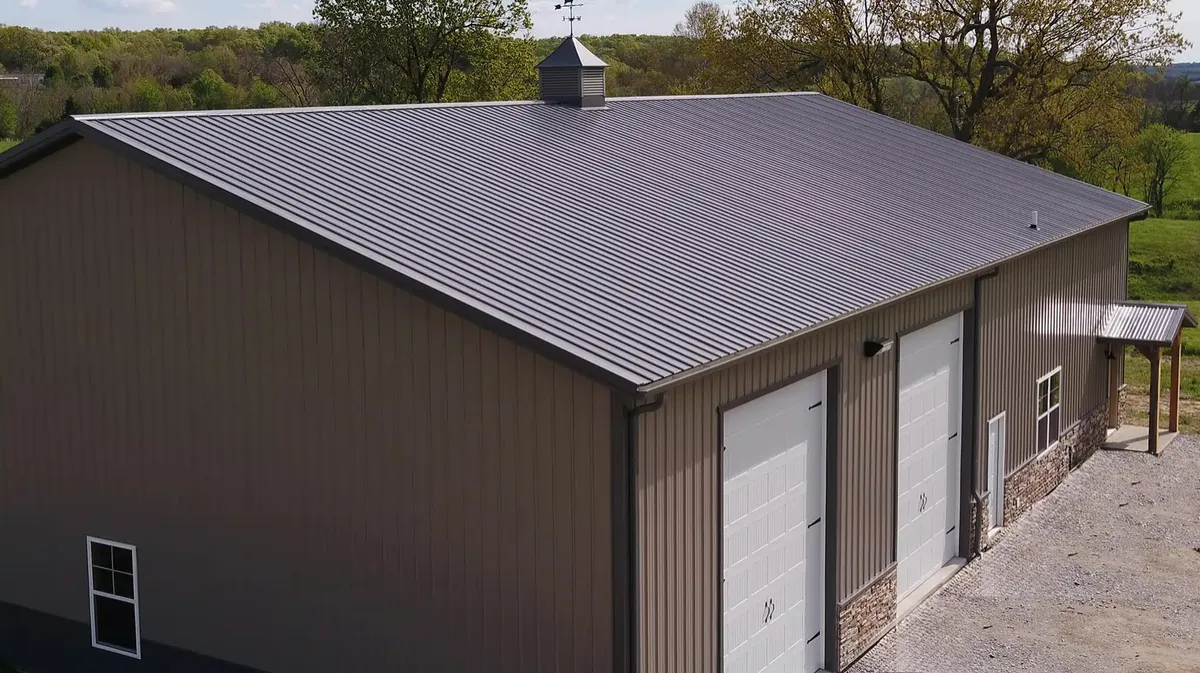
Proof Builders installs two primary metal roofing systems: exposed fastener metal roofing and standing seam metal roofing. While both use metal panels, the way they are installed, how the panels move with temperature changes, how fasteners are exposed, the appearance, and the overall cost can be very different.
We help homeowners understand those differences before recommending a system.
Free Roof Quote In 30 Seconds
Claim Your INSTANT Roof Quote Today
Long-Term Roofing Performance Without The Guesswork
Minnesota roofing systems have to deal with some serious conditions throughout the year.
Hail.
Heavy snow.
High winds.
Ice.
Freeze-thaw cycles.
Summer heat.
Rapid temperature changes.
UV exposure.
Heavy rain.
Metal roofing can provide a long service life while offering strong resistance to many of the conditions Minnesota roofs experience.
The right system, however, depends on the building, roof design, budget, appearance, and how long you intend to own the property.
What Is Metal Roofing?
Metal roofing uses steel or aluminum panels as the primary weather-resistant roof covering rather than individual asphalt shingles.
Metal panels are available in multiple profiles, gauges, finishes, colors, and installation systems.
At Proof Builders, two of the systems we work with are:
Exposed Fastener Metal Roofing
Standing Seam Metal Roofing
Both can provide long-term performance, but they solve slightly different problems.
Understanding the difference is important before choosing a metal roof.
Exposed Fastener Metal Roofing
Exposed fastener roofing is one of the more straightforward metal roofing systems.
The metal panels are installed over the roof and secured with screws that pass through the face of the panel. The screws typically use washers or sealing components designed to protect the penetration from moisture.
The fasteners remain visible after installation.
That makes exposed fastener roofing relatively straightforward to install, inspect, and maintain.
Why Choose Exposed Fastener Metal Roofing?
Exposed fastener metal roofing can make sense for homeowners and property owners who want the durability and appearance of metal without moving into the cost of a premium concealed-fastener system.
Common applications include:
Garages
Agricultural buildings
Outbuildings
Workshops
Detached structures
Commercial buildings
Steeper residential roofs
Certain residential roofing applications
Exposed Fastener Metal Roofing Benefits
Long service life when properly installed and maintained
Lower initial cost than many standing seam systems
Straightforward installation
Visible fasteners make inspections and replacements accessible
Efficient snow shedding
Impact and fire resistance
Multiple colors and panel profiles available
The biggest consideration is the fasteners themselves.
Because the screws penetrate the face of the panel, the fasteners and washers are exposed to the weather. Over time, thermal movement, weather exposure, and aging can make fastener inspection and maintenance important.
For the right building, however, exposed fastener roofing can be a practical and durable solution.
Standing Seam Metal Roofing
Standing seam metal roofing takes a different approach.
Instead of fastening the panels through the exposed face, the panels connect through raised seams and concealed clips or fastening systems.
The result is a cleaner appearance with the fasteners hidden beneath the roofing system.
Standing seam is commonly used when homeowners want a premium architectural appearance and a long-term metal roofing system.
Why Choose Standing Seam Metal Roofing?
Standing seam can be especially well suited for:
Custom homes
Upscale residential properties
Modern homes
Low-slope roof sections where appropriate
Homes where appearance is a major consideration
Long-term homeowners
Solar-compatible roofing applications
Standing Seam Metal Roofing Benefits
Concealed fasteners
Clean architectural appearance
50+ year potential service life with proper maintenance
Designed to accommodate thermal movement
Reduced exposure of fasteners to the weather
Strong long-term durability
Compatible with certain solar mounting systems
One of the biggest differences between standing seam and exposed fastener roofing is how the system handles movement.
Metal expands and contracts as temperatures change. Standing seam systems use concealed clips and panel connections that allow the panels to move without relying on exposed screws through the face of the panel.
Standing Seam vs. Exposed Fastener Metal Roofing
The two systems can both be durable. The important difference is how they are engineered and where they make sense.
Exposed Fastener:
Visible screws
Lower initial investment
Straightforward installation
Easier access to individual fasteners
Excellent option for many garages, agricultural buildings and outbuildings
Typically more maintenance attention around fasteners over the life of the roof
Standing Seam:
Concealed fasteners
Premium appearance
Higher initial investment
Designed around concealed clips and panel movement
Excellent option for higher-end residential applications
Strong long-term architectural appeal
The right choice depends on the building rather than simply choosing the most expensive system.
Which Metal Roofing System Is Right For Your Minnesota Home?
There isn't one metal roofing system that makes sense for every property.
For a garage, shop, agricultural building, or outbuilding, an exposed fastener system may provide the durability and cost structure you're looking for.
For a custom home or homeowner focused on a clean architectural appearance and long-term ownership, standing seam may be a better fit.
Proof Builders evaluates the roof structure, slope, existing roofing, roof geometry, drainage, flashing, ventilation, and intended use before recommending a roofing system.
Metal Roofing In Minnesota
Minnesota puts roofing materials through a wide range of conditions.
A roof may experience freezing temperatures and snow in January followed by intense sunlight and high temperatures in July.
That repeated expansion and contraction is one reason the installation system matters just as much as the metal panel itself.
A properly designed metal roof should account for:
Snow loads
Ice
Freeze-thaw cycles
Wind
Hail
Thermal expansion and contraction
Roof ventilation
Flashing
Penetrations
Drainage
Panel movement
Metal roofing can also shed snow efficiently, although every roof still needs to be evaluated for its specific pitch, layout, surrounding structures, and snow-management requirements.
Metal Roofing vs. Asphalt Shingles
The biggest difference is the roofing material and expected service life.
Asphalt shingles generally have a lower initial installation cost and remain one of the most common residential roofing systems.
Metal roofing generally requires a larger initial investment but can provide a substantially longer service life.
Asphalt Shingles:
Lower initial investment
Wide variety of colors and styles
Familiar installation system
Easy to replace individual shingles
Excellent option for many residential homes
Metal Roofing:
Longer potential service life
Strong durability
Efficient snow shedding
Metal panels instead of individual shingles
Available in exposed fastener and standing seam systems
Higher initial investment
Different maintenance considerations
The best material for a property depends on the homeowner's goals, budget, roof design, and expected ownership period.
Why Proof Builders For Metal Roofing?
At Proof Builders, we don't believe homeowners should have to become roofing experts just to replace their roof.
Our job is to explain what you're getting, why it matters, and what the long-term implications are.
From the initial inspection through installation, our team documents the project, communicates the next steps, and manages the roofing process.
Our process is built around transparency rather than pressure.
A Process Built On Transparency
Safer Homes & Happier Families In Just 4 Steps
1. Get In Touch With Our Team
Give us a call, fill out a contact form to request an inspection or get an instant quote for your roof today! Once we understand more about your project, one of our expert team members will come out to inspect your home!
2. Initial Inspection & Documentation
Your dedicated exterior expert will walk your property with you, inspect your roof, and document all findings. They will then sit down with you and walk you through the next steps specific to your situation, as well as timelines, ensuring you're left without any questions unanswered!
3. Build Day: What To Expect
Your assigned project manager will be on-site to manage your build from start to finish. Our in-house crews are fully-trained and certified by industry leading manufacturers so you can rest easy knowing your home is in good hands!
4. Quality Clean-Up & On-Going Support
Following your installation, we will run a triple magnetic sweep to ensure the only thing left behind is a beautiful new home! After your final walk-through you will be granted access to our quality assurance department, because we don't believe the job ends here. If there's anything we can help with in the future, you automatically jump to the front of the line!
Frequently Asked Questions
Common Questions Your Neighbors Are Asking
How long does a metal roof last in Minnesota?
The service life of a metal roof depends on the metal, gauge, coating, installation system, environment, maintenance, and workmanship. Proof Builders' materials information lists exposed fastener metal roofing at approximately 40 to 70 years depending on gauge and coating, while standing seam systems can provide 50 or more years with proper maintenance.
What is the difference between standing seam and exposed fastener roofing?
The biggest difference is how the panels are attached. Exposed fastener systems use screws through the face of the panel, leaving the fasteners visible. Standing seam systems use concealed fastening beneath raised seams, creating a cleaner appearance and allowing the panels to accommodate thermal movement.
Is standing seam metal roofing worth the extra cost?
Standing seam typically represents a larger initial investment than exposed fastener roofing. It may make sense for homeowners who prioritize concealed fasteners, architectural appearance, long-term ownership, and a premium roofing system.
Is exposed fastener metal roofing good for residential homes?
It can be. Exposed fastener systems are used on a variety of residential and non-residential structures. The suitability depends on the roof design, pitch, structure, appearance, and the homeowner's goals.
Is metal roofing good for Minnesota winters?
Metal roofing can perform well in Minnesota's snow, ice, wind, and temperature extremes when properly designed and installed. Roof pitch, ventilation, flashing, snow management, and the specific panel system all matter.
Does metal roofing resist hail?
Metal roofing can provide strong impact resistance, but performance varies by product, metal type, gauge, coating, and profile. Homeowners should review the specific product specifications rather than assuming every metal roof has the same hail rating.
How much does a metal roof cost in Minnesota?
There is no accurate one-size-fits-all price. Cost depends on roof size, pitch, complexity, existing roofing, decking, flashing, penetrations, material, panel profile, installation method, and the selected metal roofing system.
The best way to determine the actual cost is to have Proof Builders evaluate the roof.
Taking The Headache Out Of Home Improvements
Local Service Areas
Building A Brighter Future For The Greater Twin Cities

Quick links
MN License #BC646808
Copyright 2026. Proof Builders Co. All rights reserved.