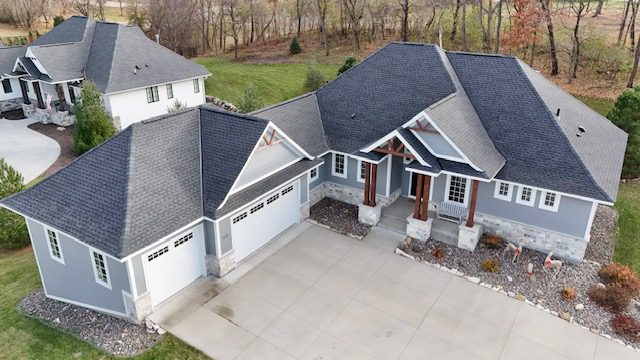
Roof Replacement in Plymouth, MN
What a New Roof Actually Costs in Plymouth MN
Roofing Guide
What Does Roof Replacement Cost in or around Plymouth MN? A Straightforward Breakdown
A standard roof replacement in Plymouth MN runs between $9,000 and $18,000 for most homes, with the final number driven primarily by roof size, shingle grade, and whether any decking or ventilation work is needed beneath the new material. Homes with steeper pitches, multiple facets, or premium material choices run toward the higher end. If your replacement is being covered by an insurance claim, your out-of-pocket cost is typically limited to your deductible.
Free Roof Quote In 30 Seconds
Claim Your INSTANT Roof Quote Today
The Four Variables That Drive Your Number
Roof replacement pricing in Plymouth is not arbitrary. Four variables account for almost all of the range between the lowest and highest estimates a homeowner receives. Understanding each one makes the quotes you get more readable and the comparisons more honest.
The first is roof size, measured in roofing squares where one square equals 100 square feet of surface area. A 2,000 square foot Plymouth home does not have a 2,000 square foot roof because the roof covers more ground than the footprint once slope is factored in. A modest one-story ranch might have 18 to 22 squares of roof surface. A two-story colonial with steeper pitch and multiple gables might have 28 to 35. Material and labor cost scales directly with square count, which is why two homes that look similar from the street can have noticeably different replacement quotes.
The second variable is shingle grade. Standard architectural shingles are the baseline for most Plymouth replacements and carry manufacturer warranties of 30 years. Mid-grade architectural products from GAF, Owens Corning, and CertainTeed run roughly $100 to $130 per square installed. Premium architectural lines with heavier mat and enhanced wind resistance run $130 to $170 per square. Class 4 impact-resistant shingles, which carry a UL 2218 certification and qualify for insurance premium discounts from many Minnesota carriers, sit at the upper end of the architectural price range.
The third variable is decking condition. A standard replacement estimate assumes the decking beneath the shingles is sound. When the crew tears off the old shingles and finds soft spots, delaminated OSB, or sections compromised by years of ice dam moisture, those sections need to be replaced before the new system goes down. Decking replacement is typically quoted at $75 to $100 per sheet of OSB or plywood. Most Plymouth replacements require some decking work.
The fourth variable is pitch and complexity. A low-slope 4:12 roof is faster and safer to work on than a 9:12 or steeper pitch, and the labor rate reflects that. Roofs with multiple valleys, dormers, skylights, chimneys, or complex intersecting planes require more precise cutting and fitting and take longer per square than a simple hip or gable roof of the same size.
What Ice and Water Shield Adds to a Plymouth Roof
Minnesota building code requires ice and water shield at the eaves of every new roof installation, extending from the eave edge to at least 24 inches inside the exterior wall line. In Plymouth, most quality contractors extend ice and water shield further, into all valleys and around all penetrations, because the combination of snow accumulation and freeze-thaw cycling creates conditions where minimum code coverage is the floor, not the target.
Ice and water shield is a self-adhering rubberized asphalt membrane that seals around nail penetrations and bonds to the decking surface, creating a waterproof layer that standard felt or synthetic underlayment does not provide. The cost difference between code-minimum and full-valley ice and water coverage on a typical Plymouth home is roughly $300 to $600. It is one of the more defensible upgrades on a Minnesota roof.
What a Permit Costs and Whether You Need One
Plymouth, Minnesota requires a building permit for roof replacement. The permit is pulled by the contractor, not the homeowner, and the cost is typically $150 to $300 depending on project scope. Legitimate local contractors include permit costs in their estimates. A contractor who does not mention permits is either excluding them from the quoted price or skipping them entirely, both of which create problems for the homeowner if the work is inspected during a future home sale.
What Insurance Changes About the Cost Equation
When a Plymouth roof replacement is covered by a homeowners insurance claim, the cost structure changes significantly. The insurance company pays the replacement cost value of the roof minus the homeowner's deductible. Most Plymouth homeowners carry deductibles between $1,000 and $2,500. The contractor is paid by the insurer at the approved scope amount, and depreciation held back at the time of the claim is released once the work is complete and documented.
This means the effective out-of-pocket cost for a fully approved insurance claim is the deductible, regardless of whether the replacement costs $11,000 or $16,000. The financial case for choosing quality materials, including Class 4 shingles that may reduce future premiums, is stronger on an insurance-covered replacement because the incremental upgrade cost is small relative to the total covered scope.
Why Two Estimates for the Same Roof Can Be Far Apart
Significant variation between estimates on the same roof usually traces to four sources: underlayment specification, ice and water shield coverage extent, decking allowance terms, and overhead and warranty backing. A contractor using 15-pound felt instead of synthetic underlayment saves roughly $150 to $300. Code minimum versus full valley ice and water coverage is another $300 to $600. Some estimates include a decking contingency and others assume zero replacement. And a nationally certified contractor with manufacturer warranty access carries different overhead than a cash-only operation.
A low estimate is not automatically a worse job and a high estimate is not automatically a better one. But estimates that do not specify underlayment type, ice and water shield coverage, decking contingency terms, and warranty products by name are estimates that cannot be fairly compared to ones that do.
WHAT THIS MEANS FOR YOU
Before signing a roofing contract in Plymouth, confirm four things in writing. First, what underlayment product will be used and what is its warranty period. Second, how far ice and water shield will be extended beyond the code-required eave coverage. Third, what the decking replacement policy is. Fourth, what manufacturer certification the contractor holds and what warranty products that certification unlocks. A contractor who cannot specify these items in writing is working from a scope that cannot be audited after the job is complete.
HOW PROOF BUILDERS APPROACHES THIS
Proof Builders provides written estimates that specify underlayment product, ice and water shield coverage scope, decking terms, and GAF warranty tier by name. As a GAF Certified Plus contractor, we can offer enhanced warranty products that are not available through non-certified installers. On insurance-covered replacements, we review the adjuster's scope against our inspection documentation and file a supplement when line items are missing before installation begins.
A Process Built On Transparency
Safer Homes & Happier Families In Just 4 Steps
1. Get In Touch With Our Team
Give us a call, fill out a contact form to request an inspection or get an instant quote for your roof today! Once we understand more about your project, one of our expert team members will come out to inspect your home!
2. Initial Inspection & Documentation
Your dedicated exterior expert will walk your property with you, inspect your roof, and document all findings. They will then sit down with you and walk you through the next steps specific to your situation, as well as timelines, ensuring you're left without any questions unanswered!
3. Build Day: What To Expect
Your assigned project manager will be on-site to manage your build from start to finish. Our in-house crews are fully-trained and certified by industry leading manufacturers so you can rest easy knowing your home is in good hands!
4. Quality Clean-Up & On-Going Support
Following your installation, we will run a triple magnetic sweep to ensure the only thing left behind is a beautiful new home! After your final walk-through you will be granted access to our quality assurance department, because we don't believe the job ends here. If there's anything we can help with in the future, you automatically jump to the front of the line!
Frequently Asked Questions
Common Questions Your Neighbors Are Asking
Does a roof replacement increase home value in Plymouth MN?
A new roof removes a deferred maintenance item that home inspectors flag and buyers use to negotiate price reductions. In Plymouth's market, where buyers frequently commission pre-inspection reports before making offers, a documented roof replacement with warranty paperwork removes the negotiating leverage a worn or storm-damaged roof creates. National data on return on investment for roof replacement runs 60 to 70 percent, though the avoided price concession in an active market often makes the effective return higher.
How long does a roof replacement take in Plymouth?
A standard Plymouth residential replacement is completed in a single day when the crew is properly resourced and weather cooperates. Larger footprints, steep pitches, or significant decking repair needs may extend into a second morning. The surrounding process, including inspection, insurance documentation if applicable, and material ordering, typically runs two to four weeks from first contact to installation day.
Should I get multiple estimates for my roof replacement?
Getting two to three estimates is reasonable. What matters more than the number of estimates is what each estimate specifies. An estimate that names the underlayment product, the ice and water shield coverage scope, the decking replacement policy, and the warranty tier is a document you can compare fairly. An estimate that says "architectural shingles, labor and materials" is not comparable to anything, regardless of how the price looks.
Taking The Headache Out Of Home Improvements
Local Service Areas
Building A Brighter Future For The Greater Twin Cities

Quick links
MN License #BC646808
Copyright 2026. Proof Builders Co. All rights reserved.