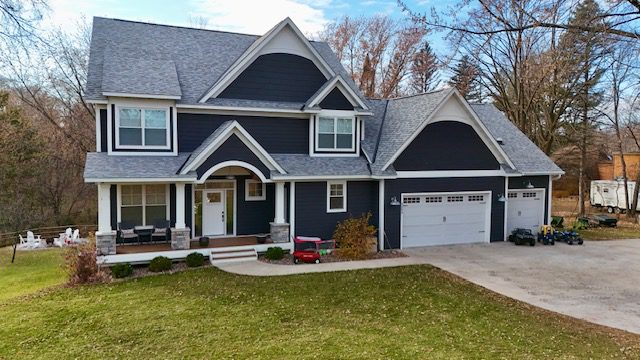
Vinyl Siding · Plymouth & Twin Cities
Vinyl siding installation & repair, built for Minnesota temperature swings.
For Jaw-Dropping Curb Appeal
Your Dream Home Could Be Closer Than You Thought
Proof Builders installs and repairs premium-gauge vinyl siding across Plymouth and the Twin Cities — an affordable, low-maintenance option engineered to hold up through freezing winters, humid summers, and everything hail and wind can throw at it.
VINYL SIDING SNAPSHOT: Material: PVC (polyvinyl chloride)
Maintenance: No painting, occasional wash
Cold-climate rating: Impact-modified panels available
Wind rating: Up to 110–180 mph, by profile
Typical lifespan: 20–40+ years
Best for: Value, color variety, easy repair
Free Roof Quote In 30 Seconds
Claim Your INSTANT Roof Quote Today
What Plymouth Homeowners Need to Understand Before Deciding
Why homeowners still choose vinyl
Vinyl remains the most-installed siding material in the Twin Cities for a simple reason: it delivers strong weather performance and a wide range of colors and profiles at a price point most other materials can't match.
Vinyl siding is a PVC-based panel product that never needs painting, resists rot and insect damage, and comes in dozens of colors, textures, and profiles from traditional clapboard to shake and board-and-batten looks. For homeowners weighing cost against durability, it remains one of the most efficient ways to protect and update an exterior.
Not all vinyl is built the same, though, and that matters more in Minnesota than almost anywhere else. Cheap, thin-gauge panels become brittle in sub-zero temperatures and can crack under hail impact or crew foot traffic during winter repairs. Proof Builders installs premium, impact-modified vinyl products specifically selected for cold-climate performance, with thicker panel gauges, reinforced nailing hems, and stronger locking systems that stay tight through freeze-thaw cycling.
We also handle vinyl siding repair as a standalone service. If a storm cracked a handful of panels, a section pulled loose in high wind, or old siding has started to warp and bow, we can often match and replace the affected panels without re-siding the entire house a faster, lower-cost path back to a weathertight exterior.
Vinyl siding advantages
Vinyl earns its place as the most popular siding material in America for reasons that hold up in the Twin Cities climate specifically.
Low, low maintenance: No painting or staining, ever. An occasional rinse with a garden hose keeps most vinyl looking new for decades.
Cost-effective coverage: Vinyl typically costs less per square foot installed than fiber cement, engineered wood, or steel — without a major trade-off in performance when premium panels are specified.
Broad color and profile range: Dozens of colors and profiles, including insulated options that add a modest R-value boost to your exterior wall assembly.
Fast, clean installation: Vinyl installs quickly compared to masonry-style products, which shortens project timelines and reduces disruption to your household.
Simple, targeted repairs: Individual panels can usually be unlocked and replaced without disturbing the surrounding siding — ideal for storm damage repair.
Moisture and pest resistant: PVC doesn't rot, and it isn't a food source for insects — two problems that affect wood siding over time.
What we install: premium vs. builder-grade vinyl
Not every vinyl panel performs the same in a Minnesota winter. Here's how the grades compare.
Panel thickness: Premium: .044–.055 in. gauge · Builder-grade: .035–.040 in. gauge
Wind rating Premium: up to 180 mph (properly fastened) · Builder-grade: 90–110 mph
Cold-weather flexibility: Premium panels use impact modifiers that resist cracking below 0°F; thin panels become brittle
Insulated option: Foam-backed insulated vinyl adds rigidity, sound dampening, and roughly R-2 to R-4
Color technology: UV-stable resin formulations resist fading better than older builder-grade stock
Warranty: Manufacturer warranties on premium lines typically run 30 years to lifetime, prorated after the first several years
A note on hail and vinyl
Vinyl can crack or spall under large hail, particularly thinner, older, or sun-brittled panels. If your siding is more than 15–20 years old, storm-related cracking is more likely even in moderate hail events one more reason a post-storm inspection matters, even if damage isn't obvious from the ground.
Vinyl siding in the Twin Cities climate
Minnesota's swing from summer highs near 90°F to winter lows well below zero puts real stress on exterior materials, and vinyl is no exception. Cheaper panels contract and expand more aggressively across that range, which is why we specify products rated for genuine cold-climate performance rather than the lowest-cost option on the shelf.
Proper installation matters just as much as product selection. Vinyl needs to be fastened loosely enough to allow for expansion and contraction — nailing it too tight is one of the most common causes of buckling and warping we see on older Twin Cities homes. Our crews follow manufacturer fastening specifications built specifically for this kind of temperature range.
If hail or wind has already damaged your siding, our storm restoration team can document that damage for your insurance claim and coordinate the repair or replacement as part of the same project.
Compare siding materials & related services
Engineered Wood - LP SmartSide Siding:
Wood-grain texture with impact-resistant engineered strand technology.
Fiber Cement - James Hardie Siding:
The premium, fire-resistant upgrade with a 30-year non-prorated warranty.
Dent-resistant, Minnesota-manufactured steel siding with lifetime hail protection.
Storm Damage - Siding Storm Restoration:
Free inspections and insurance claim support after hail or wind events.
A Process Built On Transparency
Bringing Your Home Back To Life In 5 Steps
1. Full Exterior Assessment
We assess every exterior surface in the scope, not just the siding panels. Soffit, fascia, window surrounds, corner posts, and any aluminum trim components are inspected for impact damage alongside the field panels. On homes where the roof is also being replaced, the siding and roof assessment happen in the same visit so the complete exterior scope is documented together before any insurance estimate is written.
2. Documentation & Scope Submission
Our siding assessments are organized by component category with photographs attached to each line item. When the adjuster's scope comes back, we review it against our documentation and identify any components that were missed or undervalued. This is the step that produces the supplement when the initial scope does not reflect the full extent of what the storm actually did to the exterior.
3. Material Selection
Proof Builders installs vinyl, EDCO Steel, LP SmartSide engineered wood, and fiber cement including James Hardie profiles, and can advise on which material best fits the home's exposure, the community's color requirements, and the homeowner's maintenance preferences. All three material types carry manufacturer warranties and all are appropriate for Plymouth's climate when installed correctly.
4. Build Day & Brand-New Siding Reveal
Siding removal reveals the condition of the housewrap or felt paper beneath. Where the existing moisture barrier is torn, compressed, or deteriorated, it is replaced before new siding goes on. The single most common failure point in siding installations is the weather barrier and flashing detail at windows and door openings. Every window opening is flashed before siding is cut and locked into place around it. This step is where shortcuts produce the moisture intrusion problems that appear two to four years after installation.
5. Quality Clean-Up & On-Going Support
After installation we walk the full perimeter and document the completed system. All manufacturer warranty paperwork is provided to the homeowner at close of job along with installation photographs. For projects covered by insurance, we coordinate final documentation with the claim timeline so the homeowner has a complete record for both the warranty and the claim file.
Frequently Asked Questions
Common Questions Your Neighbors Are Asking
How much does vinyl siding installation cost in the Twin Cities?
Cost depends on your home's size, the panel grade you choose, and how much prep work (sheathing, house wrap) is needed. Premium impact-modified vinyl costs more than builder-grade panels but typically pays for itself in reduced repair and repaint costs over the siding's lifespan. We provide a detailed, itemized estimate during your free on-site visit.
Can you repair just a few damaged vinyl panels, or do I need to reside the whole house?
In most cases, individual panels can be unlocked and replaced without disturbing the rest of your siding, as long as a reasonably close color match is available. Older or sun-faded siding can be harder to match exactly, in which case we'll walk you through your options, including a full or partial re-side.
Does vinyl siding crack in cold weather?
Lower-grade, thin vinyl can become brittle and crack in sub-zero temperatures or under impact from hail, foot traffic, or debris. Premium impact-modified vinyl is formulated specifically to stay flexible through Minnesota winters, which is why we default to it on installations here.
How long does a full vinyl siding installation take?
Most single-family homes in the Plymouth and Twin Cities area take between 3 and 7 working days for a full installation, depending on size, complexity, and weather. Repair-only projects are typically completed in a single visit.
Should I replace siding and roof at the same time?
When both roof and siding were damaged in the same storm event, replacing them under the same contract and on the same timeline has practical advantages. The insurance claim covers both under a single file, the same contractor documents and supplements both scopes, and the construction timeline does not require the homeowner to manage two separate crews and two separate project schedules. There is also a material advantage: when new fascia and soffit are installed as part of the roofing scope, the siding transition to the new fascia is cleaner than when the two projects are done by different crews at different times. Proof Builders handles roofing, siding, gutters, and windows under one contract for exactly this reason.
Taking The Headache Out Of Home Improvements
Local Service Areas
Building A Brighter Future For The Greater Twin Cities

Quick links
MN License #BC646808
Copyright 2026. Proof Builders Co. All rights reserved.